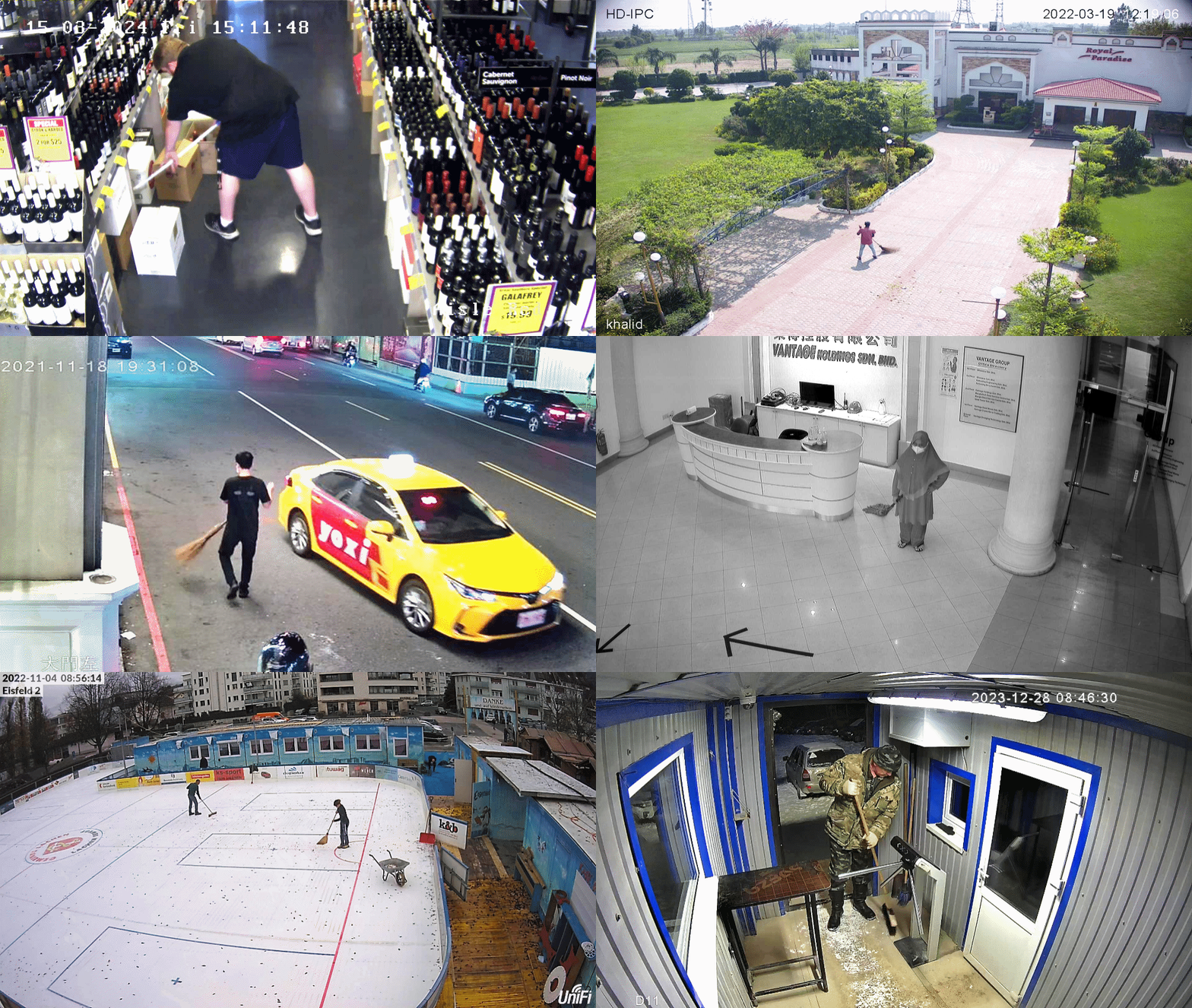
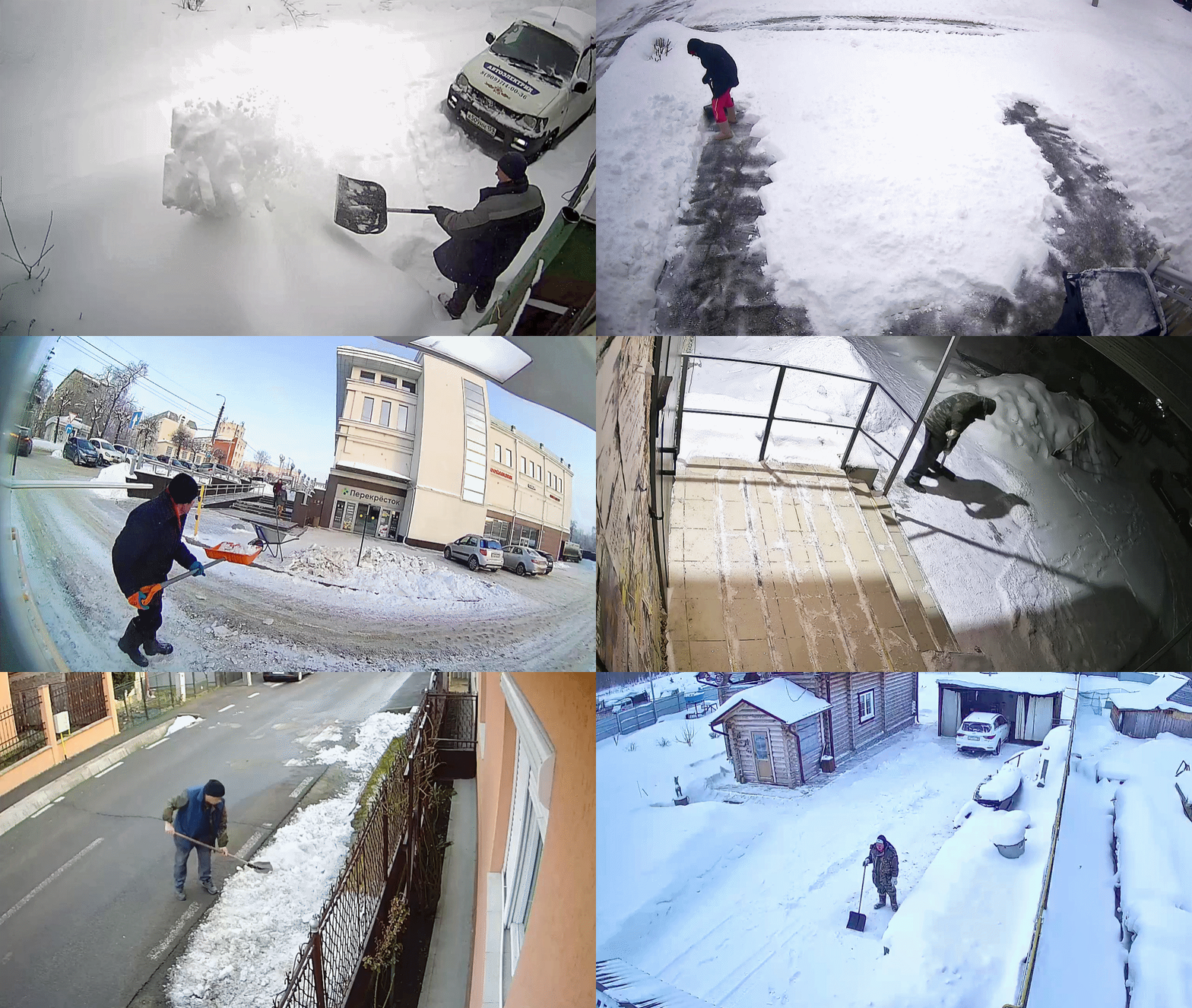
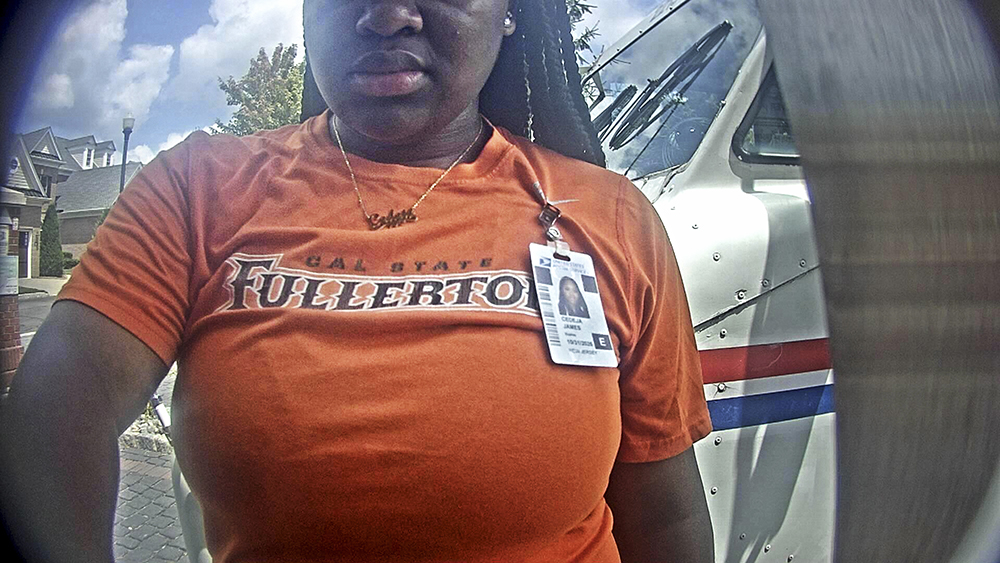
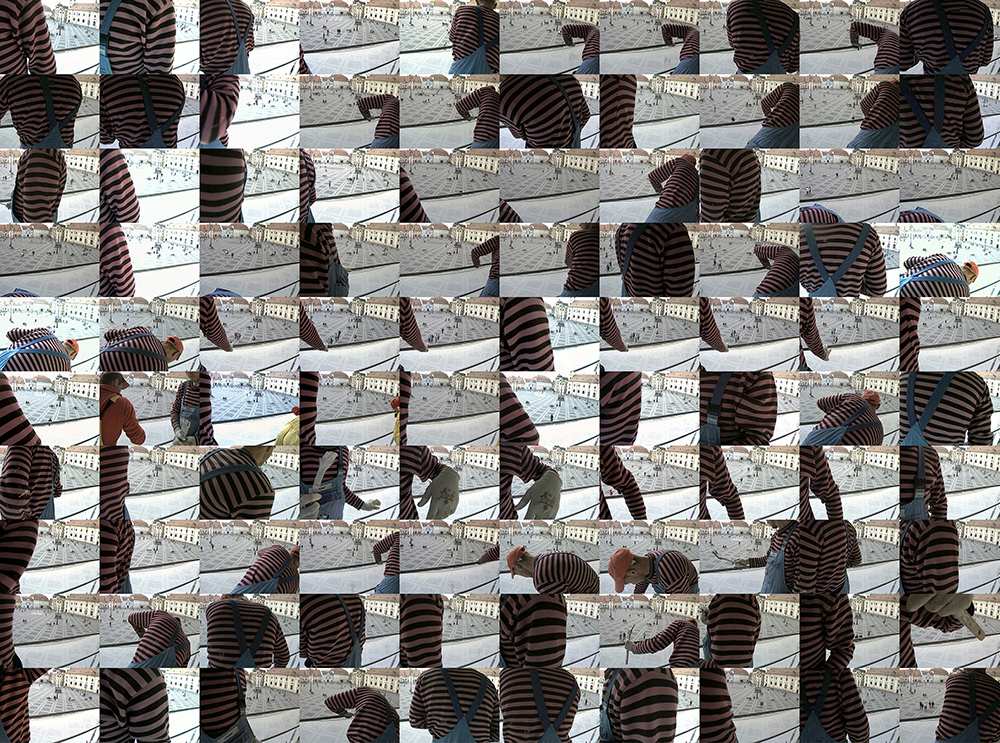
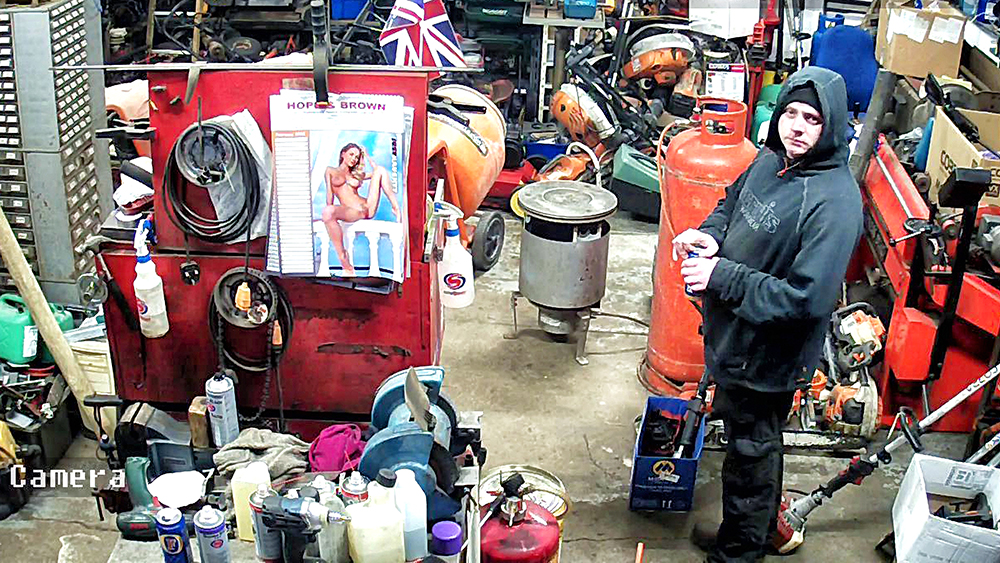
Its subjects did not pose; many did not know they were being photographed at all.
This body of work examines what this means: for the image of labour, for the politics of workplace surveillance, and for the growing industry that monitors, records, and commodifies the working body.
It asks whether the expansion of surveillance represents a structural feature of contemporary capitalism — a self-reinforcing loop in which watching workers creates work, and that work, in turn, is watched.
1. The Accidental Reportage
Surveillance cameras are mounted on street lamps, house walls, rooftops, and behind windows — installed, for the most part, with purposes that have nothing to do with the documentation of labour. They watch entrances, monitor traffic, guard property. And yet, in the course of construction work, renovation, maintenance, and the thousand ordinary tasks that keep the built environment functioning, workers enter the frame.
They appear unintentionally, unasked, and unpredictably: a mason on scaffolding, a road worker crouching over asphalt, a cleaner moving through an empty corridor at night. The camera was there. The photographer — working remotely, through the network — was watching. The result is a new kind of reportage: one in which neither the subject nor the conventional apparatus of documentary photography was present in the usual sense.
What the WORKERS series captures, in this way, is not labour as it has traditionally been represented — heroised, aestheticised, or made to carry the weight of political argument — but labour as it simply occurs: unremarkable, continuous, and largely invisible to those who benefit from it.
The incidental nature of the images is not a limitation; it is the point. These are photographs of work as the surveillance apparatus sees it: without sympathy, without narrative, without the mediating presence of a photographer who chose to be there.
2. Visibility and Its Conditions
The workers who appear in this series occupy very different relationships to the cameras that photograph them. Some are subject to deliberate, contractually sanctioned monitoring: CCTV systems installed by employers to oversee productivity, prevent theft, or manage liability. For these workers, being watched is a condition of employment — an implicit or explicit term of the labour contract, rarely negotiated and seldom refused. The camera is part of the workplace, as ordinary and as inescapable as the clock.
Others enter the frame of cameras installed for entirely different purposes — security cameras on building facades, traffic monitors, webcams pointed at public squares — and find themselves photographed by a system that was never designed with them in mind. Their presence in the image is a byproduct, an accident of proximity. They did not consent to being recorded in this context, and in most cases they have no knowledge that they were.
Between these two conditions — the monitored worker and the incidentally photographed one — lies a broad and poorly mapped territory of ambiguity. When a delivery worker rings a doorbell fitted with a camera, when a construction crew works beneath a CCTV tower installed to protect a development site, when a shop assistant passes within range of a sensor designed to count footfall: in each case, the image is made, the data is stored, and the worker's body becomes, briefly and without their say, part of someone else's record.
3. Selling Labour, Surrendering the Image
The sale of labour power — the exchange of time, skill, and physical capacity for a wage — has been the defining transaction of industrial and post-industrial capitalism. What is less often remarked is that this transaction increasingly entails a secondary transfer: the relinquishment, tacit or contractual, of the right to one's own image. The worker who enters a monitored workplace does not merely sell their capacity to work; they enter a visual economy in which their body, their movements, and their behaviour become data — recorded, stored, and potentially analysed, shared, or retained long after the working day has ended.
This transfer is rarely made explicit. Employment contracts may contain clauses about monitoring, but they seldom frame this in terms of image rights.
Data protection legislation varies widely across jurisdictions and is frequently outpaced by the development of the technologies it is meant to govern. In practice, the worker has little leverage: to refuse monitoring is, in many contexts, to refuse the job. The image of the worker — their face, their gait, their pace of movement — becomes, in this sense, a form of surplus extracted alongside their labour. They sell their working hours; they surrender, without separate negotiation or compensation, the visual record of those hours.
4. The Surveillance Industry and Its Own Labour
There is a further irony embedded in this situation, and it is one that the WORKERS series implicitly makes visible. The expansion of workplace surveillance is not merely a technological development; it is an economic one.
The cameras that watch workers are manufactured by workers. The software that analyses surveillance footage is written by workers. The data centres that store it are maintained by workers. The security firms that monitor feeds, the compliance officers who review footage, the legal teams that manage the data — all of these are forms of work, and all of them are, in turn, subject to their own regimes of monitoring and measurement.
The surveillance industry is, in this sense, a growth sector that creates the very conditions it is designed to manage. It expands in response to the perceived need for oversight; its expansion creates new workplaces; those workplaces require their own forms of oversight; and the cycle continues. Whether this constitutes a structural feature of contemporary capitalism — a self-reinforcing loop built into the logic of managed labour — or merely the latest iteration of an older dynamic in which new technologies generate new industries, which generate new forms of control, is a question that admits no simple answer.
What is clear is that the surveillance of labour is not a neutral or passive phenomenon. It produces data, generates value, and creates employment — while simultaneously placing workers under conditions of visibility that they did not choose and cannot easily refuse.
The watcher and the watched are bound together in an economy in which the act of oversight is itself productive, and in which the growth of control is, paradoxically, a measure of economic vitality.
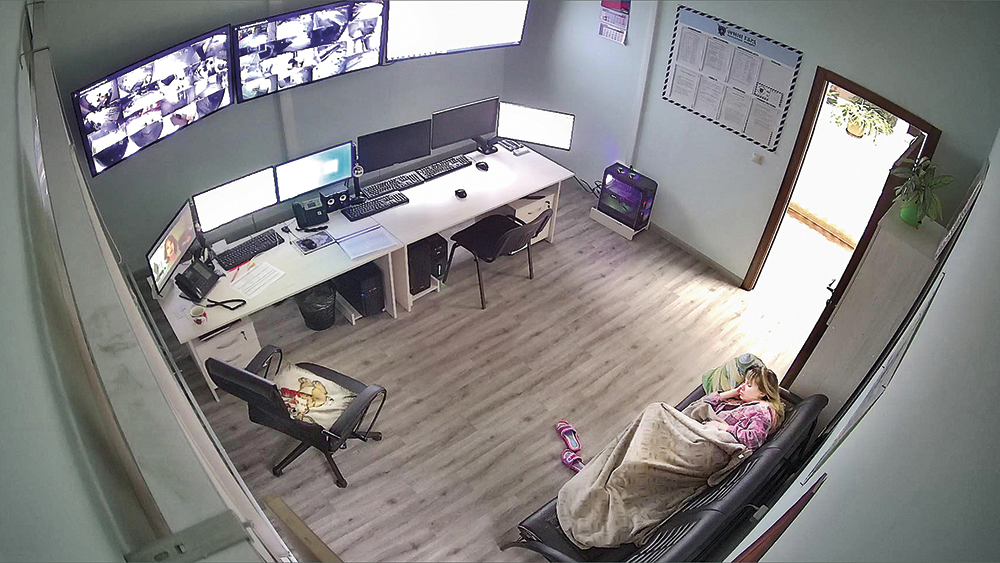
worker 33016, watching the watchers
5. An Endless Recurrence?
One might ask whether this dynamic represents something genuinely new, or whether it is simply the latest form of an ancient relationship between work and watching.
The foreman on the factory floor, the overseer in the field, the timekeeper at the mill gate: surveillance of labour is as old as organised production. What has changed is the scale, the granularity, and the persistence of the record. The contemporary surveillance apparatus does not merely watch; it remembers. The data it collects does not expire with the shift; it accumulates, is processed, and may inform decisions — about productivity, about employment, about risk — long after the moment of capture.
The WORKERS series sits within this history and opens a window onto its present form. The images it contains are not dramatic; they do not show suffering, exploitation, or resistance in any explicit sense. They show people working — doing what people have always done, in the presence of a camera that most of them did not notice.
In that ordinariness lies both their documentary value and their unsettling quality. The world of work has always been watched. It has rarely been watched quite like this.